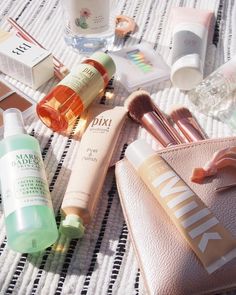

Back and Better!

Hey guys! I’m back!


I know I’ve been MIA for a couple of weeks and for that I apologize. I know I promised to give you a new post each week but my laptop got bad and I moved back to my city (I moved away for 3 months for work). I have been tired, exhausted, overwhelmed by a lot of things around me, I needed a break from everything. Not to worry as it hasn’t stopped me from working on some new product samples which I can’t wait to share with you all.


Did the break help?
Well, not really.


Today, I’m just going to talk about what I have been up to for the past couple of weeks.
Did I forget to mention my laptop issue again? If you’re feeling generous, please hit me up. Thanks and stay blessed!


So, yes! I have been developing a new product. I play around with ingredients as the curious cat that I am and never market what I produce. Well all that is about to change as I have decided to launch my skincare line. This is such a big decision for me to make. Glad that I have a great support system and amazing people around me so I’ll get through this phase. I have gotten good reports from my “test subjects” which is very comforting, at least I know the product does what it’s meant to do.


While developing this formula, I learnt a lot and the first and most important one is that theory and practical are not the same in anyway!

Theory: 1+1=2

Practical: 1+1=Coconut 😭

I do a lot of research on product formulation and raw material chemistry and have made countless samples that would pass theoretically but they kept failing the stability tests. This is an annoying aspect of product formulation as I don’t have a research team and currently have to work on my own.


Did I mention the product I was working on?
No?


It’s a pre-cleansing oil (Thanks Aina😉), what people usually refer to as “Oil Cleansers”; It’s a mild non-comedogenic oil to milk cleanser.
I did some more research and came up with a stable and by all testing standards, perfect formula, and no, I didn’t just do stability tests, I gave out test samples and monitored daily for about 4 weeks. It will be market ready sometime in March.


I am also getting involved in product development for Nigerian brands and I would soon be working with one of your faves to create awesome, safe and functional products for your skin.
If you need to start a cosmetic line and you need a Chemist to formulate or consult, I’m definitely your girl.


What else have I been up to?
Oh yeah, so I stopped going to the gym (I miss Jess so much) I’m now fat.
Who has a potion to reduce belly growth forever, Please link in the comment section.
So yeah! That’s what I’ve been up to. I don’t have a life anymore, I went for Karaoke some weeks ago, that has to count for having fun right?


You can let me know what products you think I should make next, what are the product ideas in your head you want to see come alive?
Tell me, in the comment section or on twitter @may_rhee
If you got to this point, thank you. Not all the posts here are super interesting this is one of the boring ones.


I love you guys!


Love x Light,
Mae

IS MY PHONE LIGHT MAKING ME OLDER?

Lol, perhaps.

Hi Guys, Welcome to my You Tube Channel (I’m really just practicing for when I have a channel, if I have a channel – I’m very camera shy)


It’s been two 2 weeks since my last article, I have been so swamped with work, it’s draining. Hopefully, I’ll be free next week so I can read and write more.


So enough about me, how are you?
(Feel free to let me in on your life’s secrets in the comment section or on Twitter) 😌

This article is just an excerpt from a study I am carrying out – which I put on hold for a while – it’s about the effect of High Energy Visible Light (H.E.V.L.) on the skin. It involves conducting surveys to see if people understand the effect of light particles on their skin and exposing live skin cells to H.E.V.L around a particular band of wavelength over a stipulated period of time also taking into cognizance the role of genetics in this equation; this would of course take a longer period of time to find out results to determine if H.E.V.L. actually has any effect on your skin.


Let’s cut the science talk out. (I’m sorry, I might not be able to help it)


H.E.V.L. might sound like a really big sciencey word to you, or not but it’s just plain old blue light you see everywhere around you.
It’s amazing when we see all the colors of the rainbow and we are fascinated, neglecting the bigger picture – how these colors evolve from white light (Sunlight) and its place in the electromagnetic spectrum.
White Light emanating from Sunlight isn’t as basic as it sounds, it consists of electromagnetic particles at various wavelengths which emit energy in form of light, heat and whatever energy we are yet to discover. Wavelength is inversely proportional to energy, this means that the shorter the wavelength, the higher the energy the particle would emit. Wavelength is measured in nanometers (nm), with 1 nanometer equaling 1 billionth of a meter.


I’m pretty sure we’ve heard of microwaves, right?🙃 Not the type you heat your pizza with, even though that’s where the energy comes from, hence the name.
Apart from microwaves we have gamma rays, x-rays, ultraviolet (UV) rays, visible light, infrared light, and radio waves. All these wavelengths combined form what we know as the electromagnetic spectrum.
Although all these particles are characterized by color, the visible light section is the only one humans can see. The colors of the rainbow are a perfect example of the visible light spectrum; white light dispersed into its component red, orange, yellow, green, blue, indigo and violet it has wavelengths in the range of 400–700 nanometers (nm) with Violet being the lowest wavelength and as we mentioned earlier, emits a higher amount of energy.


PS: the ultraviolet ray zone is just immediately after violet on the electromagnetic spectrum, Ultra is the Latin word for “Beyond” so ultraviolet actually means beyond violet.
Guess you didn’t know about that.


By now we should all be aware of the damage UV radiation has on the skin and as if that isn’t bad enough, rumor has it that H.E.V.L. also known as blue light can also cause visible damage on the skin. Its primary source is from the sun, but it’s also emitted by your smartphone, tablet, computer screen, florescent light bulbs and LEDs which means it’s everywhere around you especially in this digital age; Statistics show that millennials check their smartphones 157 times per day which would expose them to a ton of radiation daily. There are studies of how this affects the eyes and the body’s sleep and wake cycle known as the Circadian rhythm – We are here for the skin part though.
The rumor going around is that the wavelength of H.E.V.L. particles is close to that of Ultraviolet rays and this would at point cause them potentially as harmful as their ultraviolent neighbors next door on the spectrum. This is definitely something to consider because HEV light emitting from the sun and your electronic devices ranges from 380nm to 500nm, which is a bit longer than, but overlaps with, the range of UVA light. Interestingly, the range of blue light differs with each research, with majority of scientists putting it more strongly in the range of 400-450nm as regards its damage to skin.
With this news, it wouldn’t be an exaggeration to say that prolonged exposure to blue light from the sun, your gadgets, LEDs … would cause a similar damage as exposure to UV rays from the sun. My guess is that prolonged exposure to blue light could be linked to photoaging to some extent. It’s hard to know from just carrying out regular surveys because a lot of factors contribute to the skin’s aging process. It would take a very meticulous person to know if for sure if the light emitted from their gadgets could also be blamed for their skin aging.
Unlike UV rays which you can run away from at night time, blue light will stalk you all the way and I doubt you want to wear sunscreen to bed while you’re scrolling through Twitter.
I don’t know the best way to end this article because for one, I do not have a solution for this at this point in time, I mean I have Ideas which are dependent on the results of this study, but I do not have a solution in present time.
You can avoid prolonged exposure by turning on your night light on your device, switching to yellow lights as opposed to blue and minimize your stay in the sun.
I understand I put blue light in a very bad light, but it also has some good sides to it, routine exposure to blue light, preferably from daylight, helps regulate our body’s sleep-wake cycle, improves our mood, keeps us alert and some studies even show how blue light can also enhance memory.
So, stay away from blue light but don’t staaaaay away from blue light, you get?
You can let me know what next you want me to talk about in my next article, I’ll love to hear from you.

Love x Light (LOL Nigerians can’t even relate to this😭)

Your friendly neighborhood Cosmetic Chemist,
Mae

Karma is a freaking female Dog!

Hey guys (Welcome to my YouTube channel)


If you are new to my blog welcome🤗 and check out my previous posts (don’t forget to drop comments when you do).

So today I’m not bringing you any chemical formulae or skin biology stuff, I’m really just here to rant.
If you’ve read all my posts since the inception of my blog, you’d notice how I keep making jokes at acne prisoners, well, guess what??!!!


KARMA IS A FREAKING FEMALE DOG!!!


I have Acne!


Like not the really bad ones, they’re really tiny and all but it still counts as acne, right? Right?Right?!!!
I’m so destabilized, guys.
I wish I didn’t have to write this post.
I also wish this was a video so you’d see how dramatic I’m being over this. HaHa.
I didn’t do anything to deserve this *crying profusely*
If you read my last blog post (you should If you haven’t) the one about the DNA thingy, I mentioned how skin issues are about 60% genetics and 40% environmental factors and lifestyle. A change in your normal routine would most likely affect your skin, for example, like me, going to the gym.
I started working out about a month ago, my skin was pretty good before that and I put in a lot of work to make that happen. I now go to the gym every day after work because if I have to get summer body in 2020, I know the time to work for it is now.
My previous routine was work to office to my house and back to work the next morning but then, I decided to join the fit fam community and add the Gym to my routine. It was hell for the first 2 weeks, that’s a post for another day or better still a video.
The stress was a lot, because I would go to work, then walk to the gym (I mean, I’m trying to lose extra weight right?), walk half way home, rest for like 10 minutes, read, sleep really late, wake up really early and back to work. So I figured that I should tweak my skincare routine a little bit because of all that stress and rest a little as well. The rest part never really works for me.
The only Acne product I’ve ever had is the Neutrogena Acne cream wash, so I used it, I even used Skineal guys. Yes! I did.
I’m always so traumatized when I breakout because I didn’t do anything to deserve this, I’ve been a good girl all year round Santa. (I really have) *tears*
I also have to confess, some days I would get home and fall asleep without washing my face.
*deep sigh*
Please don’t judge me.
I felt really bad and I would usually just double up in the mornings.
These past few weeks have been so stressful, I can’t wait to go back home.
I have finally decided to take my own advice and now use a Vitamin C serum more often, also curated a new skincare routine to fit my current lifestyle and now the skin gods are smiling down at me and my breakouts are starting to heal and go away.
I am considering getting benzoyl peroxide, but like, I don’t want to, because, I don’t want to feel like I have acne.

Do you get me?

*sigh*


Well, that’s all my rant for today, I will come back with an actual blog post soon. I think I would also do a video on this too.

Love x Light
Your friend who cares to tell you the truth,
Mae

Does one size really fit all?

When searching for cosmetic products, I assume you would head to your favorite drug store, go to aisle 7(it’s usually on aisle 7) and pick up a moisturizer that you think would fit right? 297 other people would also pick up the exact moisturizer with the same thought “it would probably fit”.

But the real question is “does one size really fit all (in skincare)?”

I’m sure you have all felt a little disappointed when a product that worked perfectly for your friend didn’t work for you. It hurts doesn’t it?

A classic example would be my article on Neutrogena’s best-selling MicroClear technology not working optimally on your skin.

What do we attribute 60% of these variations to?

A complex molecule which contains all the information you’ll ever need in a living organism, DNA; Deoxyribonucleic acid (I’m going to be your biology teacher today, you are welcome.)

Genetic predispositions actually accounts for 60% of the variations in skincare, 40% can be attributed to environmental factors and other lifestyle choices; even if DNA is just a piece in the puzzle, it could just  be the missing piece.

Genetically modified cosmetics are actually now a buzz in the industry and I think it’s great that there’s innovation in the beauty industry (even though, I have heard some people refer to it as “snake oil with a digital footprint” which I think majorly is due to the gap in research, which of course can be bridged with the availability of sufficient and accurate data.)

The concept of consumer DNA testing was pioneered by 23andme after which, companies like GeneU, SkinDNA, SkinShift, Olay amongst others now provide DNA skin analysis in order to provide you with cosmetics that are tailored perfectly to your skin. (did you notice that these aren’t African companies?)

DNA analysis requires data for research in order to put out an algorithm to provide answers based on the research carried out.

But the real tea though is that, is there sufficient data in Africa to make that call?

Global research and innovation on genetics has left Africa in the stone age even though, the population in Africa harbors the most varied genetic profile on earth; which basically means that there are thousands of genetic variations in Africa. The potential of this variation has been grossly overlooked as only 2% of genetic research focuses on Africans.

This means that most of the studies carried out to produce genetically modified cosmetics have only used about 2% of African data which they currently have; let’s even imagine they use all of the 2%, we would be right to say that approximately 98% of cosmetic products powered by research and innovation have not been made to cater to African skin. Overlooking the genetic diversity of Africans would limit the amount of products that would function optimally on African skin.

Scientists estimate that we have about 20,000-25,000 different genes and around 1,500 of those genes impact our skin health, which is why you can’t eliminate the genetic factor in this case. DNA tests analyze how your genetics influence skin characteristics, such as hydration, elasticity, antioxidant capacity and sensitivity to ultraviolet rays, which play a key role in the skin aging process.

Many of the challenges we face when it comes to our skin is the result of a genetic predisposition (thanks Mom and Dad, uugh).

In essence, your DNA may have more impact than any product available on a counter top. Everything from stretch marks and varicose veins to discoloration and skin sagging are related to our genetic makeup. This explains why some people start seeing wrinkles, acne, and skin discoloration in their 20s while others may not experience skin troubles until later in life or even never. It also explains why a product that works for Amy may not work for Susan or Bill or Arnold.

Get it?

So to summarize and answer the main question – Does one size really fit all?

No, Cosmetics are made to fit different skin types based on the formulation and research, as usual, would play a major role in the formulation of these products.

To end this, adequate data must be available to power research and innovation in order to formulate products that would function optimally on African Skin as there is so much potential for genetically engineered cosmetics in Africa.

If you are of African descent, note that only about 2% of your genetic data has been made available for this research so most products may not give you optimal satisfaction when you use them, you would inevitably be playing a game of Russian Roulettes.

Do not disregard the fact that environmental and lifestyle factors also affect skin health, good skin is as much nurture as it is nature. Put on sunscreen, wash your face, curate a good skincare routine; it sure does count for something. 40% is a whole lot.

Love x Light

Your friendly neighborhood cosmetic chemist,

Mae

Be sure to let me know your opinions about this in the comment section below.

You should never mix these ingredients together in your routine!

Please don’t, you’ll just be wasting good money because the combo might not work or even worse, you might have an irritation or a burn.

My motto while using skincare products has always been Keep It Silly Simple (K.I.S.S.), you may just want to adopt that.

Due to the amount of products we buy every day for different skin issues, we may be tempted to layer one product right on top of another one without realizing that these products have active ingredients which may undergo some kind of chemical reaction and the resultant product may not be good for your skin, especially if you have sensitive skin.

You would have to consider which ingredients each product contains and whether or not combination with other ingredients would wreak havoc to your skin. This may mean; breakouts, greasiness, redness, flakiness, burning or the ingredients may not even work because they would cancel each other’s effect.

Here are the combos you should stay away from:

Benzoyl Peroxide + Retinol

Again, my Acne brethren may be victims of this. Sorry.

Benzoyl peroxide can inactivate topical Retinol (Retinol on the surface of your skin), Don’t layer the two at the same time instead, use Benzoyl peroxide in the morning and retinol at night.

Vitamin C + AHAs/BHAs

Both of these ingredients are wonderful and are on the skincare hall of fame but used together, they would throw off the skins PH balance because of the excessively high acidic levels. This may give you an irritation/burn. I doubt you crave that. You can use both of them but I advise you do at different times of the day. Don’t forget to use a sunscreen and RE-APPLY.

Vitamin B3 (Niacinamide) + AHAs/BHAs

Niacinamide is also a skincare fave, won several awards for best/most famous conditioning agent and it’s pretty good if you ask me, it also aids in skin repair and redefining skin structure. It tends to function optimally at neutral PH (Which is 7). Acids (AHAs and BHAs) will not function optimally in that range because they have a lower PH (I should really put out a post on PH). So, while this may not be devastatingly terrible, I’d advise you to thread with caution while using this combining the 2 because they may just cancel each other out.

Vitamin C + Retinol

This is just like the relationship between an Igbo girl and Yoruba boy, it will surely end in tears. Lmao, JK, date who you want please.

These two are great on their own but once you start layering, it would give you an irritation, you don’t want that. You can use both but at different times, use Vitamin C in the morning and Retinol in the evenings.

AHAs/BHAs + Retinol based products

Don’t layer this combo immediately or you might have an irritation. Retinol on its own already gives a drying effect, hence, layering with acids may cause extra dryness and this would result in an irritation. If you want to make a cocktail out of these two, wait after some minutes before you apply each ingredient also include glycerin or hyaluronic acid in your routine.  You can also just save yourself the stress and use at different times of the day. I advise you use retinol mostly at night, you can pair with glycerin or hyaluronic acid.

Exfoliants + Skin brightening agents

Ignore the words “skin brightening” they basically do the same thing as exfoliants. Using both of them at the same time may be really harsh on your skin and cause an irritation.

Glycolic acid + Salicylic acid

With acids, more is not always better, I advise you use one at a time, using both may cause an irritation on your skin and it wouldn’t matter if you have sensitive skin or not.

Niacinamide + Vitamin C – Relationship status: It’s complicated

I would think both would cancel each other out because they do not work in the same PH range. Although it’s not particularly harmful to use both at the same time, but for optimal performance, I suggest you use them at different times of the day or give a reasonable time interval before layering (about 20 minutes would be fine)

Oil based + water based products

It’s no secret that oil and water don’t mix, it’s the same in skincare. In layering your products, if you’re into skincare cocktail, avoid layering oil based products before water based products because they (oil based) would create a film on your face and hinder the penetration of the water based products and you’ll just have droplets of unpenetrated water based products on your skin which means the product would have no effect. What a waste!

A rule of thumb: water based products come before oil based products in layering.

Also, this is a friendly reminder to use Sunscreen every day and re-apply.

I also want to write about the ingredients that would work well on your skin but this post is already too long and I’m afraid you might already be bored (that’s if you even read till this point, if you did, thank you). I’ll be back to tell you ingredients that would work together in your routine, in another blog post.

Stay anticipating!

Love x Light

Your friendly neighborhood Cosmetic Chemist,

Mae

Wash your face! but wait! read this first.

I’m going to make this short and straight to the point because I am really late for my gym class (I still don’t know why Jessica made me pay for torture) but also, I am really excited to tell you guys about double cleansing; it’s something I scream about all the time.

Double cleansing as the name implies, is a 2- step cleansing routine borrowed from the 10-step Korean beauty routine.  

It basically involves using an oil based cleanser first, followed by a water based cleanser.

Ps: To know a water based cleanser, you can check the ingredient list on the product and if the first ingredient is water or “aqua” then you have yourself a water-based cleanser.

Double cleansing actually makes a lot of sense because of a scientific principle that “like dissolves like”- this means that oil based cleansers would be better at dissolving oil-based dirt, cosmetics and any other oil based residue while water-based would remove non-oil based cosmetics and residue.

If you had a chemistry-related major, you can refer back to polar and non-polar compounds, that’s literally the basis of this.

The oil cleanser in this method is a great way to get rid of oil which is overproduced in acne, makeup and sunscreen at the end of the day.

(You cleanse by rubbing the oil all over your face, smearing everything you have on and just either wipe off or wash off, depending on the kind of oil cleanser you’re using.)

If you live in a city like Lagos (deep sigh!) with enormous pollution in the air, wear sunscreen, 5 layers of foundation and concealer, mascara, sweat as a result of Lagos sun and have all those invisible microbes sticking to your face, I think you should really consider using this double cleanse method more than anyone. Lol.

But seriously though, sunscreen and makeup products are really heavy and have oil compounds which may not be completely washed away by water-based cleansers. Leaving these on your face could cause a buildup of residue, oil, dirt… which can give the skin a dull appearance. it would also contribute to clogging your pores, which then can lead to acne or enlarged pores.

The double cleanse method is also a really mild way to get rid of dirt on your face, making way for all the other luscious products to penetrate freely into your skin.

The thing with having makeup on your skin and using a water based cleanser is that you would have to wash like 4-5 times before all the makeup goes away and while cleansing is important, you don’t want to over cleanse your face (this may be really harsh and give you dehydrated skin) but the oil cleanser would get it off in no time.

The best part?

It doesn’t even have to be expensive, you can use a pure oil (I recommend Rosehip oil) on your face or a soft butter, or, you can buy a good oil cleanser from a store; which in my opinion would give a better skin feel. While pure oils would cleanse your skin, it would leave your skin feeling really greasy and you may not want that. Most brands formulate their oil cleansers with emulsifiers; which means that when you wash off after cleansing, it turns milky once the oil gets in contact with water and all the oily goop would go down the drain, no greasy feeling afterwards. Perfect, if you ask me.

I’m not making any strong recommendations, but, If I was, I would say you go with the latter.

The double cleanse method was the game changer in my routine. There’s also satisfaction in watching your makeup being smeared all over your face and then the transformation to an incredibly clean and fresh face.

If you wear makeup, sunscreen (this should be everyone), use any product on your face or as I mentioned, live in Lagos, Nigeria(lol), you should consider trying this out.

Feel free to let me know how it goes after about a week or two.

I have to go now; hopefully, 2020 is the year I finally get my banging body. I’ll keep y’all updated on this.

Love x Light

Your soon-to-be-body-banging neighborhood Cosmetic Chemist,

Mae

What you need to know about Neutrogenas’ Microclear Technology

Neutrogena has some really great products; some of us may not totally agree with this because we haven’t reaped all of its supposed benefits. I would share my thoughts on why.

Meanwhile, there are a couple of Neutrogena products in the market now, with the most famous probably being their Acne care line. My current fave is the Oil-free acne wash pink grape fruit cream cleanser. I promise you a review on this product, soon but let’s not disappoint each other by dropping a timeline.

If you have used any of the Acne Care products, you should be familiar with the word “Microclear Technology”. It is usually written somewhere on the product. If you haven’t noticed, you should check that right away.

So what is Microclear technology?

This is Neutrogenas’ patented technology composed of three major ingredients which act together to prepare the skin to receive salicylic acid just so it can act deeply in your pores and release all its powers to help you get rid of spots.

Ps: these are the 3 ingredients that would make that possible:

1.        Phospholipids: protective emollient agents that make the skin feel softer.

2.        Lactate molecules which promote the dissolving of the sebum.

3.        Benzalkonium chloride, a cleansing agent that acts on the source of imperfections.

Sorry for the big words but, you gotta learn boo.

So, this is how the Microclear technology works.

The 3 ingredients (as we mentioned previously) dissolve sebum(oil) on the surface of the skin which would enable a deeper penetration of salicylic acid into your skin. This would literally mean that the salicylic acid goes straight to the source of your acne and begins to fight to efficiently clear the face. This helps in eliminating imperfections and even controlling their reappearance, all without drying out the skin.

Acne captives should be very familiar with salicylic acid. LOL

Salicylic acid is an acid, obviously.

However, when acids are mentioned on skin care, we think first of AHAs and BHAs. Salicyclic acid is a Beta Hydroxy Acid (BHA). BHAs are oil soluble and as such would penetrate deeper into the lipid layers of skin cells. Once it penetrates the skin, it dissolves skin debris that clogs pores, acts as an anti-inflammatory agent and also helps red inflamed pimples and pustules go away faster.

Salicylic acid is in the same family as aspirin, which is acetylsalicylic acid. This should explain the countless DIYs on YouTube where people try to use aspirin paste to heal themselves. Sad!

Salicylic acid fights acne, but is all acne the same? Are there racial differences in acne? If yes, does the same amount of salicylic acid work for all? Is there such a thing as too much salicylic acid? Will the Microclear technology work on eliminating all types of acne if it differs by race?

These are part of the things that keep me up at night. I really need some sleep! Uugh!

To answer some of these questions,

Yes, Acne on African skin is different from acne on Caucasian, Asian and Hispanic skin.

Ethnic origins can influence the structure and appearance of the skin, just as environmental and cultural factors would also have an impact on the skin. This would mean that even though all ethnic types might share a skin disorder, the intensity might differ with each group and the method of treatment may differ with each ethnic group.

I really hope you’re not lost yet.

So, does this determine the amount of salicylic acid that would work on each acne type? I would really think so.

Just follow my thought pattern for a second.

The aim of the Microclear technology is basically to increase the amount of salicylic acid which penetrates into the skin to fight off acne, but what if you don’t need that amount of salicylic acid and you experience a topical skin irritation as a result of excess salicylic acid?

Don’t get me wrong, you could be really lucky, it works a 100% on your skin and that’s your happily ever after.

But what if not?

Here are my thoughts.

Neutrogena did a good job in curating this technology. The methodology speaks for itself as they must have gathered surplus genetic data and any other data that would aid their research to come up with this technology.

The question now is, whose data? I would doubt they have sufficient data on African skin (and it’s many disorders). A more important question would be “does data on African skin exist?”

Now because your data probably wasn’t used to generate this technology, it would have no business working optimally on your skin. I mean, it could work but not as much as it would on its target market.

So, does Neutrogena’s Microclear Technology work?

The answer is probably yes.

Yes, but, it would work best on its target market.

Are you Neutrogenas’ target market?

Probably not, but this doesn’t mean Neutrogena products are bad, it just means they’re not the best products for you.

In essence, the only way to completely fight off acne in African skin is to get sufficient data which would aid in research to develop products that work optimally on African skin.

Anyway before that happens, we can keep utilizing Neutrogenas’ microclear technology and just pray for luck because we’ll need it.

Love x Light

Your friendly neighborhood Cosmetic Chemist,

Mae

I am not an Esthetician!

Neither am I a dermatologist.

Okay, I really wanted the title of this post to be a little dramatic.

Hopefully, mission accomplished.

I am a Chemical Engineer who wandered off into the world of Cosmetic Science.

I would tell you how my love for cosmetics began, but, that’s a completely different blog post.

So who is a Cosmetic Scientist?

A Cosmetic Scientist or chemist or engineer is someone who develops and formulates skin care, color cosmetics (regular makeup) and other personal care products for manufacturers. This means that they’re the ones who come up with the formulas for your favorite product (hopefully you’re boycotting the home-made organic thing as I advised). They also carry out extensive research to come up with new products, test cosmetic prototypes for safety, fix production problems, evaluate competitive products and develop skills to better understand the difference between a good product and one that doesn’t work as well.

An Esthetician on the other hand is a beauty care professional who focuses on the appearance of the skin. An Esthetician gives facials, other skin care treatments and can help your skin look fabulous. They are your plug when you have acne, blackheads and any other skin blemish. They advise you on which products are the best for you and how to use them.

Estheticians are licensed only to work on the surface of the skin. That means they can give facials and light chemical peels that deal with the superficial layers of the skin. They can give exfoliating body treatments like scrubs and body wraps, which involve an application of a detoxifying mud or something really fancy that makes your skin glow up.

A dermatologist is a skin doctor, basically. They have to go to college, read medicine, and get a license to treat patients (Cosmetic Chemists and Estheticians go to college too). They work with patients who have actual diseases, they carry out surgeries, give treatment plans based on medical tests carried out.

Dermatologists, Estheticians and Cosmetic Chemists work together but their job roles are different as I mentioned, even though they would all have knowledge of skin biology and how the products you use or environment affect your skin.

So, in essence, if you have Acne, want to glow up or just need product recommendations, an Esthetician is your friend. If you have eczema, skin cancer or any other skin disease, you have no business visiting an Esthetician or cosmetic scientist/chemist, a dermatologist should be your plug. A Cosmetic Chemist formulates the products the Esthetician and/or dermatologist would recommend, so he/she would be in the best place to know the chemistry of the ingredients and how they react together on your skin.

So now that you know the difference, If you need an Esthetician, you can hit @asherstuta on twitter, remember to tell her you’re from Mae.

Love x Light

Your friendly neighborhood Cosmetic Chemist,

Mae

Is there a reason why my Vitamin C Serum isn’t working?

Yes.

There are a couple reasons why your vitamin C doesn’t work or is giving you an irritation.

I mean it could be that you’re expecting a miracle after one day of slathering it on your face which if it worked, would literally be what I said; A miracle.

Vitamin C, which is Ascorbic Acid in the form of L-Ascorbic Acid, is an asset in skincare. Everyone wants to have one in their cabinet.

Vitamin C is an antioxidant, which basically means it neutralizes the oxidative stress caused by free radicals (Free radicals are toxic, unstable molecules that contribute to aging by depleting the natural antioxidants in our skin and causing cellular and DNA damage), it protects against UV-induced skin damage and aids in skin repair.

For the sake of this article we would call Ascorbic Acid, AA and Dehydroascorbic Acid, DHA.

AA is the most unstable form of Vitamin C and the most potent of all the derivatives. It works optimally on the skin at a PH of about 3.0. Its unstable nature would mean that it can change to another form (which would be less potent or basically useless on the skin) really easily.

Now that we know what Vitamin C is, let’s see reasons why it’s not doing its job.

  • It’s no longer Vitamin C

Due to the unstable nature of AA it can be oxidized to another compound – DHA (which would be useless on your skin, may even cause some browning on your skin and can also cause aging, which is what we are trying to avoid in the first place right?)

There are a couple of factors that can cause AA to oxidize; Light, Air, Heat and reaction with other compounds.

A little Chemistry:

C6H8O   <——————–>       C6H6O6

 Ascorbic Acid <——————–>  Dehydroascorbic Acid

The double ended arrow signifies a reversible reaction, where AA can be oxidized (-2H+) and/or reduced (+2H+) in the presence of air, heat, light or another compound as we mentioned earlier.

Exposing your vitamin C serum to air by leaving it open can cause oxidation, exposing it to light can also cause oxidation.

Now because there are a lot of active agents in skincare, let’s not forget that these are chemicals which undergo certain reactions and have products, some of which aren’t as useful or potent as the primary compound.

A good example would be using Benzoyl peroxide with Vitamin C.

If you are still serving your time in acne jail, Benzoyl peroxide wouldn’t sound strange to you and because you might have hyperpigmentation you’ve been told to use vitamin C. If you noticed that it doesn’t work that’s because they basically cancel out each other. The reaction between both compounds give a completely different product; which is useless.

  •  You are mixing the wrong products together

AA functions optimally at a very low PH of around 3.0, mixing another product which has a different PH would destabilize the action of AA on your skin.

Look at a few examples:

Retinol + Vitamin C

Bad combo, you would be wasting your money because, these two ingredients function optimally at different PH ranges. You would see no effect on your skin.

Niacinamide + Vitamin C

Again, Bad combo. Niacinamide functions optimally at a neutral PH, adding AA to it would render both useless.

Vitamin C + AHAs/BHAs

If you’re new to skincare, AHA means Alpha Hydroxy Acid and BHA means Beta Hydroxy Acid, they’re really hot in the market now. This isn’t a really bad combo because they function in the same PH range but the only downside to this is too many acids on your face would give you a skin irritation even before you know it.

2/10- I do not recommend.

  • It’s just expired

Check the best before date on your serum, if it has expired, throw it away.

So how can you get Vitamin C to function optimally on your skin?

  • Use up your serum once you open it. It’s advisable to use it up in 3 months, more stable derivatives may last up to 6 months or more.
  • Keep it away from light and heat. You also want to keep the lid tightly closed to avoid exposure to air.
  • Avoid using it with ingredients mentioned above, you can use these ingredients together but at different times of the day, i.e. use Vitamin C in the morning and Retinol in the night.
  • Always use a Sunscreen
  • You can get more stable forms of AA but note that they are not as potent as AA and it would take a long time to see visible changes on your skin.

A few of them are: Magnesium ascorbyl phosphate (MAP), Sodium ascorbyl phosphate (SAP), Ascorbyl glucoside, Ethyl ascorbic acid, Ascorbyl tetraisopalmitate.

So, in essence, the brand may not be bad, you might just be using your vitamin C serum wrongly.

Kindly fix up.

Love x Light

Your friendly neighborhood Cosmetic Chemist,

Mae

Black Soap is like Black Magic; it will come back to haunt you!

Photo by Daniel absi on Pexels.com

Yes! What I said.

This is because there is a lot of really poorly formulated black soaps out there and many of you just really like to DIY.

So the main issue here is that you are still using soap on your face.

Step up your game, please.

I’m sure we have heard of Black soap, I think it’s even more famous than the lemon thing, or not.

I’ll just get right to it.

Black soap is locally made with oils and lye – gotten from a highly alkaline hydroxide usually produced from ashes. Due to the nature of lye, the final product would have an incredibly high PH, and because the formulations vary wildly, it usually sits around a 10 on the pH scale – which is about 1000x more alkaline than pure water. A high pH product will damage the acid mantle while irritating and aggravating the skin. Soaps like this can actually cause burns if left in direct contact with your skin for too long.

Ouch, I’m sure you don’t want that.

After using black soap on your face, you have a tingling feeling on your skin, it gives your skin that squeaky clean feeling, yeah, that’s mostly a bad thing.

That squeaky clean feeling is the soap dragging out all the oils from your skin; the excess oils and the really good ones, this is too harsh for your skin and would cause dehydration. Some natural oils should be allowed to remain on the skin to protect the pH balance and keep microflora in check.

If you have acne, I’m sure you’ve been marketed a couple of black soaps while serving your time. Stay away from it. It will give you the dry and squeaky feeling we talked about and everything would seem okay till your sebum layer fights back, overproducing oils on your skin. So now, you have acne with an oily and dehydrated face.

Exactly like black magic, comes back to haunt you, even worse.

If you have dry face, it just dries it out even more.

In reality, there are no actives in raw black soap, it actually just does what soap is supposed to do; cleans and most times, over-cleans.

Also, since everyone is now a homemade skincare genius and mixes honey, lemon, raw pineapples, pawpaw, carrot, cabbage, and makes a full salad in their soap without even considering a preservative or maybe, somehow, these ingredients will grow bacteria over time and actually give you some form of irritation.

No? You didn’t think of that?

If you are looking for active ingredients in a cleanser, you can go buy a properly formulated product that contains the active ingredients, you seek.

Nevertheless, I strongly believe if black soap is formulated properly and incorporated in a good skincare routine, it could be good for your skin, but hey, that’s not the topic for today.

So in essence, should you stop using black soap?

Yes.

But really, the choice is absolutely yours. I mean, there is scientific evidence that black soap doesn’t do you any good. It cleanses, but so does a properly formulated facial cleanser while improving your appearance and skin health.

If after this sermon you choose to use black soap, who am I to stop you?

But just know that slathering your skin with incredibly unpredictable, potent, drying soap is a very risky game.

Love x Light

Mae

Design a site like this with WordPress.com
Get started